cduck.me
1# drawSvg
2
3A Python 3 library for programmatically generating SVG images (vector drawings) and rendering them or displaying them in a Jupyter notebook.
4
5Most common SVG tags are supported and others can easily be added by writing a small subclass of `DrawableBasicElement` or `DrawableParentElement`.
6
7An interactive [Jupyter notebook](https://jupyter.org) widget, `drawSvg.widgets.DrawingWidget`, is included that can update drawings based on mouse events.
8
9# Install
10
11drawSvg is available on PyPI:
12
13```
14$ pip3 install drawSvg
15```
16
17## Prerequisites
18
19Cairo needs to be installed separately. When Cairo is installed, drawSvg can output PNG or other image formats in addition to SVG. See platform-specific [instructions for Linux, Windows, and macOS from Cairo](https://www.cairographics.org/download/). Below are some examples for installing Cairo on Linux distributions and macOS.
20
21**Ubuntu**
22
23```
24$ sudo apt-get install libcairo2
25```
26
27**macOS**
28
29Using [homebrew](https://brew.sh/):
30
31```
32$ brew install cairo
33```
34
35# Examples
36
37### Basic drawing elements
38```python
39import drawSvg as draw
40
41d = draw.Drawing(200, 100, origin='center', displayInline=False)
42
43# Draw an irregular polygon
44d.append(draw.Lines(-80, -45,
45 70, -49,
46 95, 49,
47 -90, 40,
48 close=False,
49 fill='#eeee00',
50 stroke='black'))
51
52# Draw a rectangle
53d.append(draw.Rectangle(0,0,40,50, fill='#1248ff'))
54
55# Draw a circle
56d.append(draw.Circle(-40, -10, 30,
57 fill='red', stroke_width=2, stroke='black'))
58
59# Draw an arbitrary path (a triangle in this case)
60p = draw.Path(stroke_width=2, stroke='green',
61 fill='black', fill_opacity=0.5)
62p.M(-30,5) # Start path at point (-30, 5)
63p.l(60,30) # Draw line to (60, 30)
64p.h(-70) # Draw horizontal line to x=-70
65p.Z() # Draw line to start
66d.append(p)
67
68# Draw multiple circular arcs
69d.append(draw.ArcLine(60,-20,20,60,270,
70 stroke='red', stroke_width=5, fill='red', fill_opacity=0.2))
71d.append(draw.Arc(60,-20,20,60,270,cw=False,
72 stroke='green', stroke_width=3, fill='none'))
73d.append(draw.Arc(60,-20,20,270,60,cw=True,
74 stroke='blue', stroke_width=1, fill='black', fill_opacity=0.3))
75
76# Draw arrows
77arrow = draw.Marker(-0.1, -0.5, 0.9, 0.5, scale=4, orient='auto')
78arrow.append(draw.Lines(-0.1, -0.5, -0.1, 0.5, 0.9, 0, fill='red', close=True))
79p = draw.Path(stroke='red', stroke_width=2, fill='none',
80 marker_end=arrow) # Add an arrow to the end of a path
81p.M(20, -40).L(20, -27).L(0, -20) # Chain multiple path operations
82d.append(p)
83d.append(draw.Line(30, -20, 0, -10,
84 stroke='red', stroke_width=2, fill='none',
85 marker_end=arrow)) # Add an arrow to the end of a line
86
87d.setPixelScale(2) # Set number of pixels per geometry unit
88#d.setRenderSize(400,200) # Alternative to setPixelScale
89d.saveSvg('example.svg')
90d.savePng('example.png')
91
92# Display in Jupyter notebook
93d.rasterize() # Display as PNG
94d # Display as SVG
95```
96
97[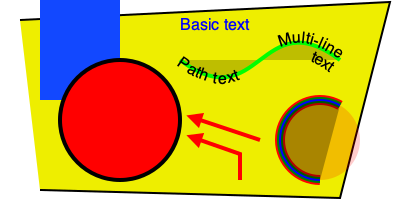](https://github.com/cduck/drawSvg/blob/master/examples/example1.svg)
98
99### Gradients
100```python
101import drawSvg as draw
102
103d = draw.Drawing(1.5, 0.8, origin='center')
104
105d.draw(draw.Rectangle(-0.75,-0.5,1.5,1, fill='#ddd'))
106
107# Create gradient
108gradient = draw.RadialGradient(0,-0.35,0.7*10)
109gradient.addStop(0.5/0.7/10, 'green', 1)
110gradient.addStop(1/10, 'red', 0)
111
112# Draw a shape to fill with the gradient
113p = draw.Path(fill=gradient, stroke='black', stroke_width=0.002)
114p.arc(0,-0.35,0.7,30,120)
115p.arc(0,-0.35,0.5,120,30,cw=True, includeL=True)
116p.Z()
117d.append(p)
118
119# Draw another shape to fill with the same gradient
120p = draw.Path(fill=gradient, stroke='red', stroke_width=0.002)
121p.arc(0,-0.35,0.75,130,160)
122p.arc(0,-0.35,0,160,130,cw=True, includeL=True)
123p.Z()
124d.append(p)
125
126# Another gradient
127gradient2 = draw.LinearGradient(0.1,-0.35,0.1+0.6,-0.35+0.2)
128gradient2.addStop(0, 'green', 1)
129gradient2.addStop(1, 'red', 0)
130d.append(draw.Rectangle(0.1,-0.35,0.6,0.2,
131 stroke='black', stroke_width=0.002,
132 fill=gradient2))
133
134# Display
135d.setRenderSize(w=600)
136d
137```
138
139[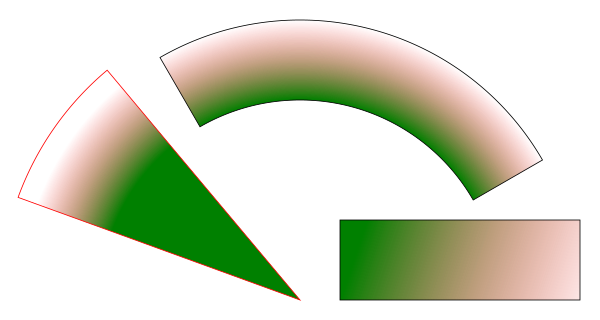](https://github.com/cduck/drawSvg/blob/master/examples/example2.svg)
140
141### Duplicate geometry and clip paths
142```python
143import drawSvg as draw
144
145d = draw.Drawing(1.4, 1.4, origin='center')
146
147# Define clip path
148clip = draw.ClipPath()
149clip.append(draw.Rectangle(-.25,.25-1,1,1))
150
151# Draw a cropped circle
152c = draw.Circle(0,0,0.5, stroke_width='0.01', stroke='black',
153 fill_opacity=0.3, clip_path=clip,
154 id='circle')
155d.append(c)
156
157# Make a transparent copy, cropped again
158g = draw.Group(opacity=0.5, clip_path=clip)
159g.append(draw.Use('circle', 0.25,0.1))
160d.append(g)
161
162# Display
163d.setRenderSize(400)
164d.rasterize()
165```
166
167[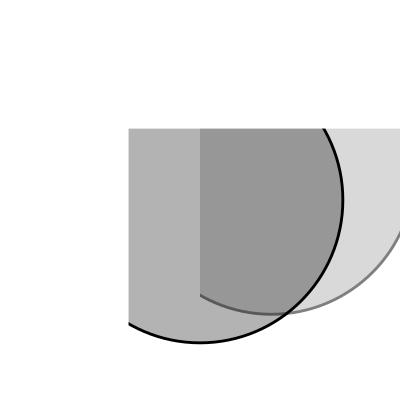](https://github.com/cduck/drawSvg/blob/master/examples/example3.svg)
168
169### Implementing other SVG tags
170```python
171import drawSvg as draw
172
173# Subclass DrawingBasicElement if it cannot have child nodes
174# Subclass DrawingParentElement otherwise
175# Subclass DrawingDef if it must go between <def></def> tags in an SVG
176class Hyperlink(draw.DrawingParentElement):
177 TAG_NAME = 'a'
178 def __init__(self, href, target=None, **kwargs):
179 # Other init logic...
180 # Keyword arguments to super().__init__() correspond to SVG node
181 # arguments: stroke_width=5 -> stroke-width="5"
182 super().__init__(href=href, target=target, **kwargs)
183
184d = draw.Drawing(1, 1.2, origin='center')
185
186# Create hyperlink
187hlink = Hyperlink('https://www.python.org', target='_blank',
188 transform='skewY(-30)')
189# Add child elements
190hlink.append(draw.Circle(0,0,0.5, fill='green'))
191hlink.append(draw.Text('Hyperlink',0.2, 0,0, center=0.6, fill='white'))
192
193# Draw and display
194d.append(hlink)
195d.setRenderSize(200)
196d
197```
198
199[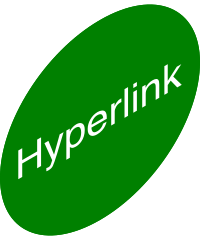](https://github.com/cduck/drawSvg/blob/master/examples/example4.svg)
200
201### Animation with the SVG Animate Tag
202```python
203import drawSvg as draw
204
205d = draw.Drawing(200, 200, origin='center')
206
207# Animate the position and color of circle
208c = draw.Circle(0, 0, 20, fill='red')
209# See for supported attributes:
210# https://developer.mozilla.org/en-US/docs/Web/SVG/Element/animate
211c.appendAnim(draw.Animate('cy', '6s', '-80;80;-80',
212 repeatCount='indefinite'))
213c.appendAnim(draw.Animate('cx', '6s', '0;80;0;-80;0',
214 repeatCount='indefinite'))
215c.appendAnim(draw.Animate('fill', '6s', 'red;green;blue;yellow',
216 calcMode='discrete',
217 repeatCount='indefinite'))
218d.append(c)
219
220# Animate a black circle around an ellipse
221ellipse = draw.Path()
222ellipse.M(-90, 0)
223ellipse.A(90, 40, 360, True, True, 90, 0) # Ellipse path
224ellipse.A(90, 40, 360, True, True, -90, 0)
225ellipse.Z()
226c2 = draw.Circle(0, 0, 10)
227# See for supported attributes:
228# https://developer.mozilla.org/en-US/docs/Web/SVG/Element/animateMotion
229c2.appendAnim(draw.AnimateMotion(ellipse, '3s',
230 repeatCount='indefinite'))
231# See for supported attributes:
232# https://developer.mozilla.org/en-US/docs/Web/SVG/Element/animateTransform
233c2.appendAnim(draw.AnimateTransform('scale', '3s', '1,2;2,1;1,2;2,1;1,2',
234 repeatCount='indefinite'))
235d.append(c2)
236
237d.saveSvg('animated.svg') # Save to file
238d # Display in Jupyter notebook
239```
240
241[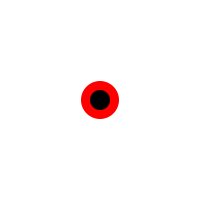](https://github.com/cduck/drawSvg/blob/master/examples/animated.svg)
242
243### Interactive Widget
244```python
245import drawSvg as draw
246from drawSvg.widgets import DrawingWidget
247import hyperbolic.poincare.shapes as hyper # pip3 install hyperbolic
248
249# Create drawing
250d = draw.Drawing(2, 2, origin='center')
251d.setRenderSize(500)
252d.append(draw.Circle(0, 0, 1, fill='orange'))
253group = draw.Group()
254d.append(group)
255
256# Update the drawing based on user input
257click_list = []
258def redraw(points):
259 group.children.clear()
260 for x1, y1 in points:
261 for x2, y2 in points:
262 if (x1, y1) == (x2, y2): continue
263 p1 = hyper.Point.fromEuclid(x1, y1)
264 p2 = hyper.Point.fromEuclid(x2, y2)
265 if p1.distanceTo(p2) <= 2:
266 line = hyper.Line.fromPoints(*p1, *p2, segment=True)
267 group.draw(line, hwidth=0.2, fill='white')
268 for x, y in points:
269 p = hyper.Point.fromEuclid(x, y)
270 group.draw(hyper.Circle.fromCenterRadius(p, 0.1),
271 fill='green')
272redraw(click_list)
273
274# Create interactive widget and register mouse events
275widget = DrawingWidget(d)
276@widget.mousedown
277def mousedown(widget, x, y, info):
278 if (x**2 + y**2) ** 0.5 + 1e-5 < 1:
279 click_list.append((x, y))
280 redraw(click_list)
281 widget.refresh()
282@widget.mousemove
283def mousemove(widget, x, y, info):
284 if (x**2 + y**2) ** 0.5 + 1e-5 < 1:
285 redraw(click_list + [(x, y)])
286 widget.refresh()
287widget
288```
289
290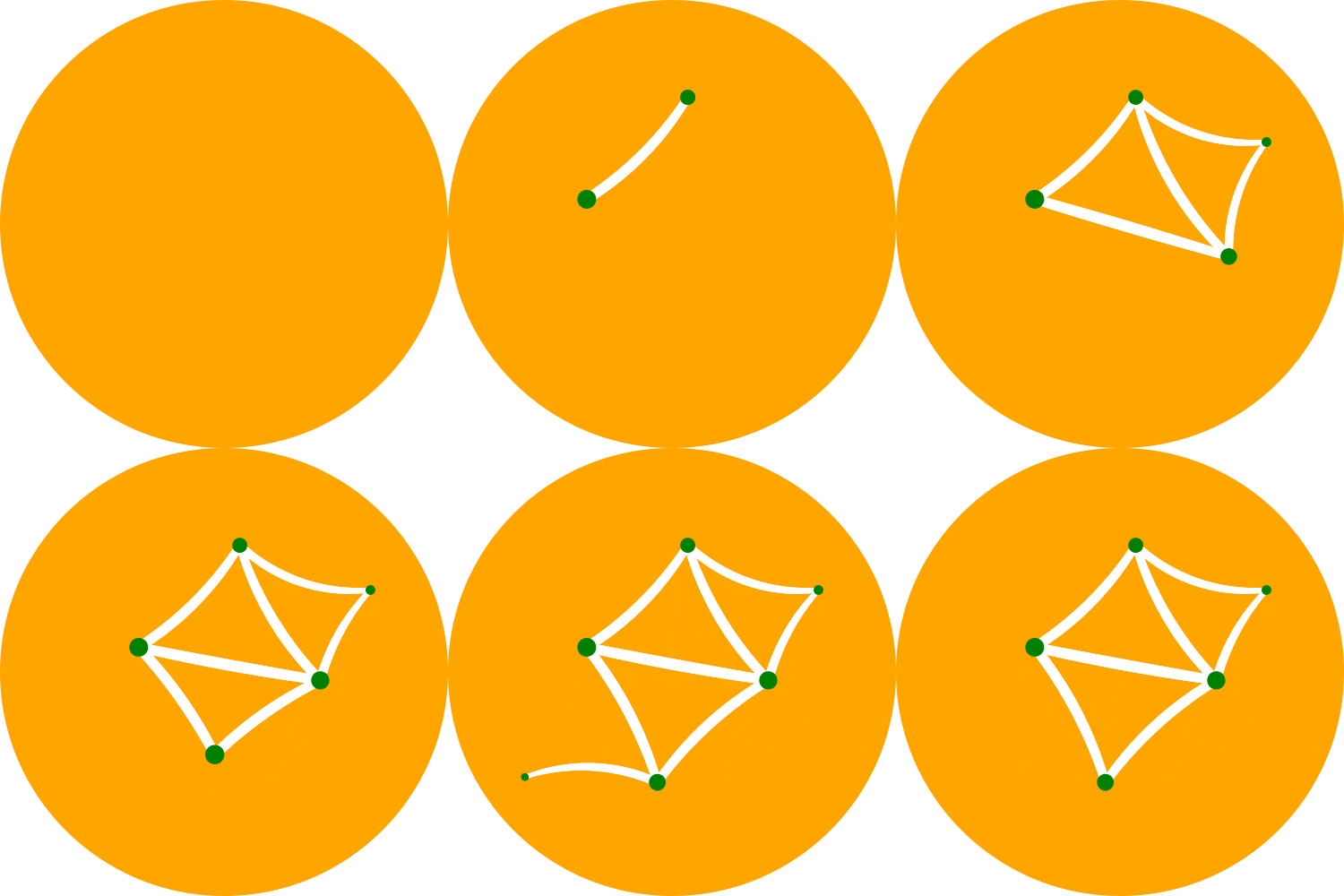
291
292### Animation with Python
293```python
294import drawSvg as draw
295
296# Draw a frame of the animation
297def draw_frame(t):
298 d = draw.Drawing(2, 6.05, origin=(-1,-1.05))
299 d.setRenderSize(h=300)
300 d.append(draw.Rectangle(-2, -2, 4, 8, fill='white'))
301 d.append(draw.Rectangle(-1, -1.05, 2, 0.05, fill='brown'))
302 t = (t + 1) % 2 - 1
303 y = 4 - t**2 * 4
304 d.append(draw.Circle(0, y, 1, fill='lime'))
305 return d
306
307with draw.animate_jupyter(draw_frame, delay=0.05) as anim:
308# Or:
309#with draw.animate_video('example6.gif', draw_frame, duration=0.05
310# ) as anim:
311 # Add each frame to the animation
312 for i in range(20):
313 anim.draw_frame(i/10)
314 for i in range(20):
315 anim.draw_frame(i/10)
316 for i in range(20):
317 anim.draw_frame(i/10)
318```
319
320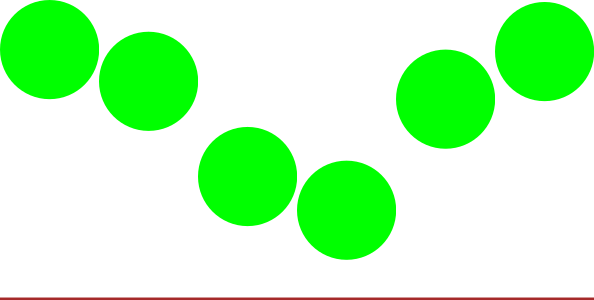
321
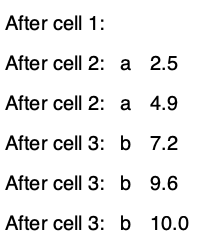
322### Asynchronous Animation in Jupyter
323```python
324# Jupyter cell 1:
325from drawSvg.widgets import AsyncAnimation
326widget = AsyncAnimation(fps=10)
327widget
328# [Animation is displayed here (click to pause)]
329
330# Jupyter cell 2:
331global_variable = 'a'
332@widget.set_draw_frame # Animation above is automatically updated
333def draw_frame(secs=0):
334 # Draw something...
335 d = draw.Drawing(100, 40)
336 d.append(draw.Text(global_variable, 20, 0, 10))
337 d.append(draw.Text('{:0.1f}'.format(secs), 20, 30, 10))
338 return d
339
340# Jupyter cell 3:
341global_variable = 'b' # Animation above now displays 'b'
342```
343
344